Friday, 27 May 2016

Horsetail - rearing its ugly head again and what can you do


Image

This is a very good article, our expert Charlotte wrote about horsetail and what we did (and you can do) to get rid of it the organic way. Horsetail likes damp conditions. The City Council put in some drainage for us, which will hopefully help. Other things to do are:

Image
horsetail's head
Image
horsetail's head 
  • Lime the soil to raise the pH a bit. Horsetail does better in lower pH soils which Empty Common Community Garden (ECCG) has.
  • DO NOT attempt to dig out the horsetail roots just take the top off and drown. The roots are super long, spreading wide and deep. They also have nodes on their roots that are activated to produce lots of root growth when a root is broken. 
  • Take off the sporing heads as they emerge in spring. Drown these in water for at least three weeks before putting the sludge on to a piece of waste land. DO NOT add them to the compost just in case the spores are still alive. The sporing heads are small so not a lot of organic matter is lost. 
  • Mulch the land with cardboard and then woodchips or council green waste compost and when the horsetail emerges, hoe it. Just mulching doesn’t work, in fact it makes the problem worse because horsetail likes the damp conditions created by mulching, it grows straight through the cardboard and finds there is no competition so takes off. Horsetail isn’t good at competing with tall plants. 
  • The hoed plants should be drowned in the wheelie bins for at least three weeks. The drowning water should be returned to the beds BUT NOT when there are vegetables growing as it is very smelly, microbe-rich stuff. 
  • The sludge should be added to the compost along with any drowning water - if the compost needs moistening. The reason for returning everything is to return the nutrients that the horsetail has accumulated back to the soil for other plants. Often some plants compete better than others because they are good at accumulating minerals that others aren’t. Horsetail is a good mineral accumulator, it accumulates silica from deep down and competes well against other plants in low silica soils. Adding the drowning products back to the surface makes the silica and other nutrients available to other plants improving their competitive ability. 
  • In summer possibly try planting lots of marigolds. They are said to be good at deterring horsetail. Also try growing a tall crop. A must-see video of horsetail spores is here. It makes it seem tragic to drown them. This plant is a living fossil and there used to be forests of it growing 100ft tall... so things could be worse.

Tuesday, 10 May 2016

Photos from the garden: from mid March to early April


Spring has arrived and a touch of summer too judging from last weekend and yesterday... It's raining today but it's good for the garden after several dry and warm days that required daily watering! Below are some photos from March and April, plus updates on what we have been up to in the past few weeks. 

In March we enjoyed crisp lettuces from the polytunnel. More potatoes were planted - some potatoes were chitted in the polytunnel but mice were taking off the new shoots, so we won't be doing this again! Strawberry plants donated by a kind allotment holder were planted, alongside chard, which is ready now in May. Masses of seed sowing has been going on, including a wild flower meadow and we added currant bushes and raspberries to our soft fruit corner. 

Polytunnel lettuce in March

End of March - the flower border around the oak tree is coming to life
In early April we had a few lovely warm days.Strawberries are all planted out now, another bed enlarged, weeded, composted and sown. Netting was put up on certain plants to defend them from pigeons who have been attacking our lovely chard and rocket. 

Strawberry plant with flower

Nets protect tender plants from birds
Beautiful chard re-growth
A cornucopia for wild birds
Our resident artist Rebecca made the lovely cornucopia with willow, which was decorated with wool for nesting birds to forage. 


Tuesday, 26 April 2016

The Horny Gollach Hotel... what is it all about?


Attached to one of our apple trees - and probably to be extended to other trees, if our guests like the accomodation - is a green bottle full of straw. What is it for? It's a Horny Gollach Hotel!

The Horny Gollach
The horny gollach's an awesome beast, 
Souple an' scaley; 
He ha twa horns an' a hantle o' feet 
An' a forky tailie. 

I have heard people complain about earwigs (or horny gollachs) eating their fruit and have also read it on fruit-growing forums etc. I think it is unfair. They probably ARE awesome beasts for the fruit grower. Earwigs eat a wide range of small insects, notably woolly and other aphids, scale insects, mites, small larvae of all sorts - including codlin moth. If they are present in quantity it is believed they can equal blue tits and wasps in their effectiveness.

If you have earwigs you may see them or their frass, a dark powder, in the clusters of fruit where they hide; it washes off easily. They never seem to touch undamaged fruit, and create far fewer problems than other equally voracious predators such as wasps.

Research is being carried out about them as beneficial insects in orchards; if you want more information, visit the Suffolk Traditional Orchard Group's website and read the Autumn 2013 newsletter.

In the meantime, don't spray your trees with insecticides. Let the awesome horny gollachs play their part in keeping your fruit pest free.


How to make the hotel

Remove the bottom from a plastic bottle, leave the cap on. Fill with rolled-up corrugated cardboard or darken the bottle and loosely fill with straw. Make holes in the bottom edge of the bottle, some to tie a line across to stop the cardboard or straw falling out and some to use to tie it to the tree. Tie at the top and bottom making sure the bottom edge is in contact with the trunk so the earwigs can easily enter the foyer from the trunk.


Thursday, 14 April 2016

April showers are good for us... plus pictures from our members and updates

 Bird box - February 2016
Growing shoots - February 2016
Spring showers are upon us, which is great for the outdoor growing beds. We have many pictures in the blog's backlog, so thank you to all those who sent them... Here are some more photos showing the garden from late winter to spring.... 


Making a bug hotel with salvaged items


Step 1: A bug hotel in a wire basket!

Step 2:fill  basket with pine cones, nuts and sticks to make a cosy home for bugs


Step 3: fill another basket with dried leaves and other garden bits

Step 4: Put the second basket on top of the first one and secure it. Voila!

Springtime... March 2016


Blast from the past

See pictures below to see how far we have come! The first one shows a digger trying to dig a slope so the dumper truck can be hauled back to the surface.


Monday, 14 March 2016

Spring is in the air... plus Orchard Park event


Sunday 13 March was a fine day... here are some wonderful photos of how the garden looks in mid March.... Thank you, Mary, Rebecca and all who contributed!


There was a  merry crowd of at least 14 working at the garden. Beautiful slate signs from Rebecca's artful hand took pride of place on the raised beds.


Everybody was treated to coffee and chocolate chip muffins by some of the garden's loyal young members. Volunteers planted potatoes in the newest bed and admired the seedlings in the polytunnel. As Mary said enthusiastically in her email: "The lettuces there are literally pieces of art." 


She adds: "All in all we do believe spring is has arrived... the bird song and spring flowers make the garden such a pleasant place to be. Our fearless leader Charlotte is happy with the progress." 


More horse manure has been added as the beds are prepared for strawberry transplanting next week. The garden has four types of strawberries thank to the kind donation by an allotment gardener based in Trumpington.


More photos to come.... watch this space

We received this email from the Community Orchard Project - if you are free next Sunday, it sounds like a great event... if you can tear yourself from our lovely garden that is!

If you want to join us, read this post....


News from Orchard Park's Community Group
Our next event is on Sunday 20 March 10:00-12:30. We've arranged for 'Orchard Bob' who has many years of experience managing orchards, and has his own wildlife orchard site, to show us how to manage the apple trees at the orchard properly. Dan from Histon and Impington Community Orchard Project will also be there. Please arrive at the Orchard Ring Fort Road, Orchard Park, at 10:00 promptly as Bob will start the session with health and safety information. We will also be managing the habitat at the Balancing Pond to ensure it remains optimal for basking reptiles and invertebrates. If you can't join at 10:00 you're welcome to join us later to help at the Balancing Pond. Please note that children 12 and under must be accompanied and supervised by an adult.

For more information about the event and a map of the location see:


Monday, 22 February 2016

Recycling jar lids, polytunnel update and Birdwatch news


Everything is looking lovely at the garden and most beds have been well composted with soil improver and well-rotted horse manure, so hopefully we will harvest big fat vegetables...

Scroll down to see our team of volunteers at work - and having a social cuppa... Plus Birdwatch count and the photo of our newest member....

The tea urn was fired up on a rainy Sunday

Tomas making polytunnel shelving


Charlotte made a name tag for a fruit tree using a jam jar lid and plans to make more for the other trees and perennial plants - a great way to recycle and it looks pretty too... The Empty Common Garden is blooming (primroses, daffodils) and many hands make the work light. We have finished clearing up a new patch that has fertile and wonderful-looking soil. As Mary wrote in a group email: "Join us...spread the word... it is a lovely place to visit or work as much or as little as time allows."
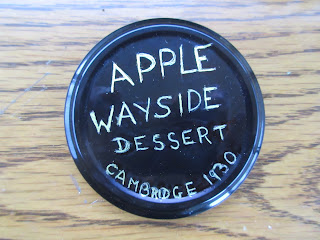

 A jam jar lid makes a useful tree label


Droplets of water looking magical

Below are the Birdwatch results for the Empty Common Community Garden, sent in by Rebecca.


2 Robins
2 Linnets
1 Common gull
5 Woodpigeons
2 Magpies
6 Rooks (decided not crows)
15 Piebald wagtails

Birdwatchers were also treated to a flyby, of 20 Barnacle/Brent Geese or perhaps greylags... the jury is out on that one! Results were submitted to the RSPB.

Where's everybody???

Last but not least... here's our youngest member... Say hello to Freddie!


Wednesday, 3 February 2016

The Empty Common Community Garden - still looking great in winter!

Last Sunday it was a rainy day but a group of hardy volunteers still gathered to check on the garden and do a Birdwatch (watch this space for a blog post!) 

Below is a pictorial contribution from volunteers - the photos were taken in late 2015 and in January 2016. Thank you for submitting these great photos, Mary, Rebecca and Charlotte. More to come, so you can all see how the garden progresses.


Mary made two delicious soups and provided beer for a Sunday get-together in late 2015. So even in the dead of winter we still like to eat together in the great outdoors.


January 2016: the daffodils are already out in force as is our army of volunteers! Check out the lovely rotted compost in the wheelbarrow. As Charlotte said in an email, we will have big fat veggies this coming year.