Saturday, 19 June 2021

Summer is nearly here!

 Replacement of the leaky flat roof...

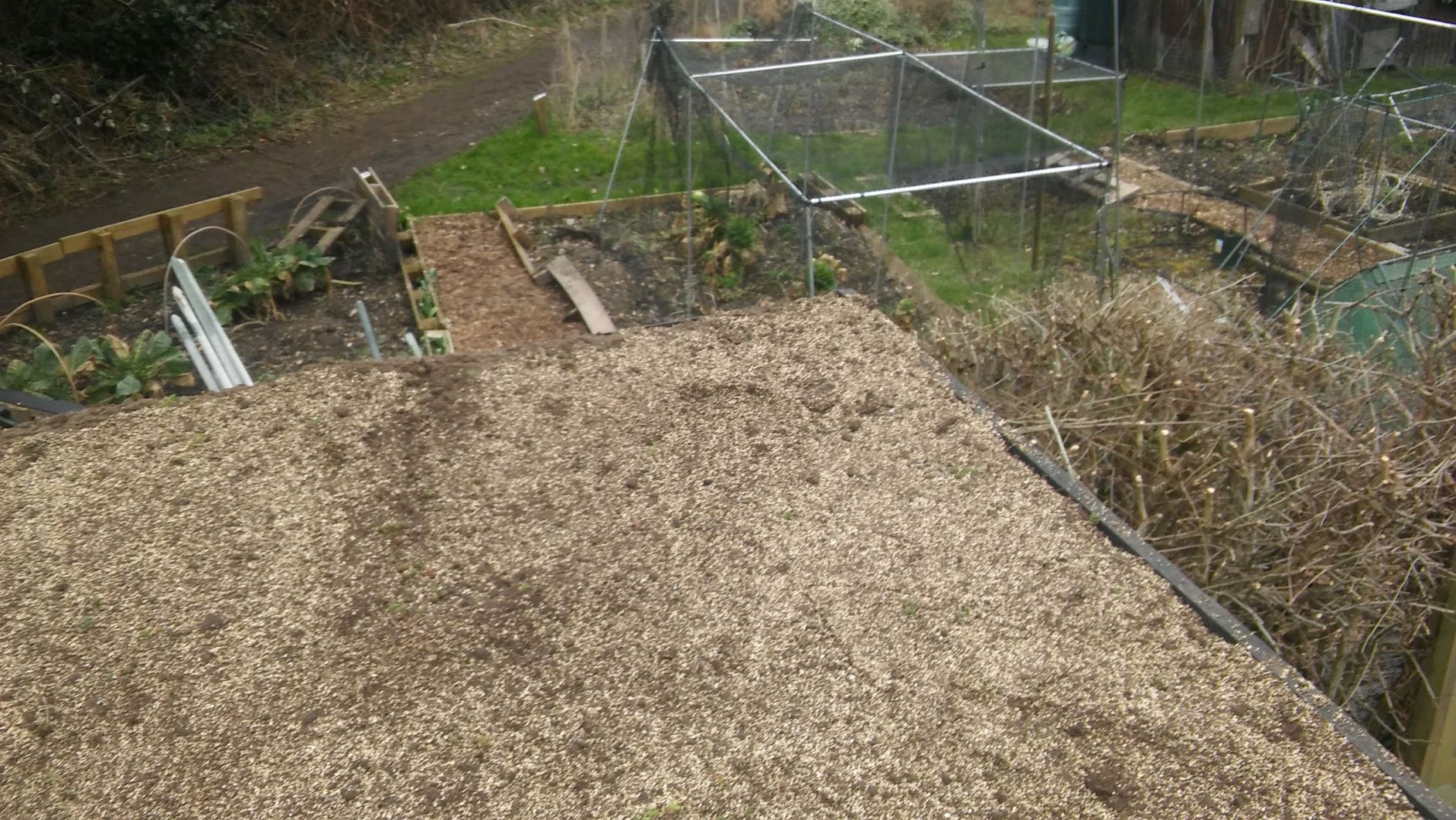
Our leaky old flat roof on the black shed has now been replaced with a new, sloped green roof. Just like when the much-needed dustbin lids for our rhubarb forcing bins turned up on the towpath exactly when needed, green roof sedums were found dumped on a piece of land just when the roof was ready to plant. 

...with a new, sloped green roof!

Firstly, we covered the roof with a pond liner, followed by the addition of soil (vermiculite mix). The third picture below shows the green plants, transported in the van to the final destination: our garden!
We also put up a bird box at the back of the black shed, facing into the hedge, so fingers crossed for a load of healthy chicks to go with our bee cocoons in the bee home on the side of the shed. 

Our bee harvest this year was 43 healthy mason bees, 16 unknown cocoons (see the picture below), four resin bees and seven straws full of bees, which cannot be seen, but some have used mud and some resin. It will be interesting to see if they emerge well...

It looks like there may be two types of mason bee in the wooden blocks, as some tubes had smaller cocoons than others; Charlotte thinks the unknown cocoons might be some sort of parasitic wasp.

This is the first year we have had resin bees in our bee home and we're sad to say that when the straws were removed, the four resin bee nests in the wooden block broke. They were also stuck and the little pupae inside are very delicate. 

If we have any next year, we will just leave them in situ. Luckily, we seem to have more resin bees in the straws we put in some of the tubes. The resin bees use tree sap for making their nests and seem to overwinter in the form of a softish pupae, whereas the mason bees overwinter as dormant adult bees inside their cocoons, which are pretty strong. Here's hoping we have another good harvest next year. 

                                                                     
This blog post was created by Michela, who is currently participating in the Duke of Edinburgh - bronze award.

Thursday, 22 April 2021

Busy times at the Empty Common Community Garden


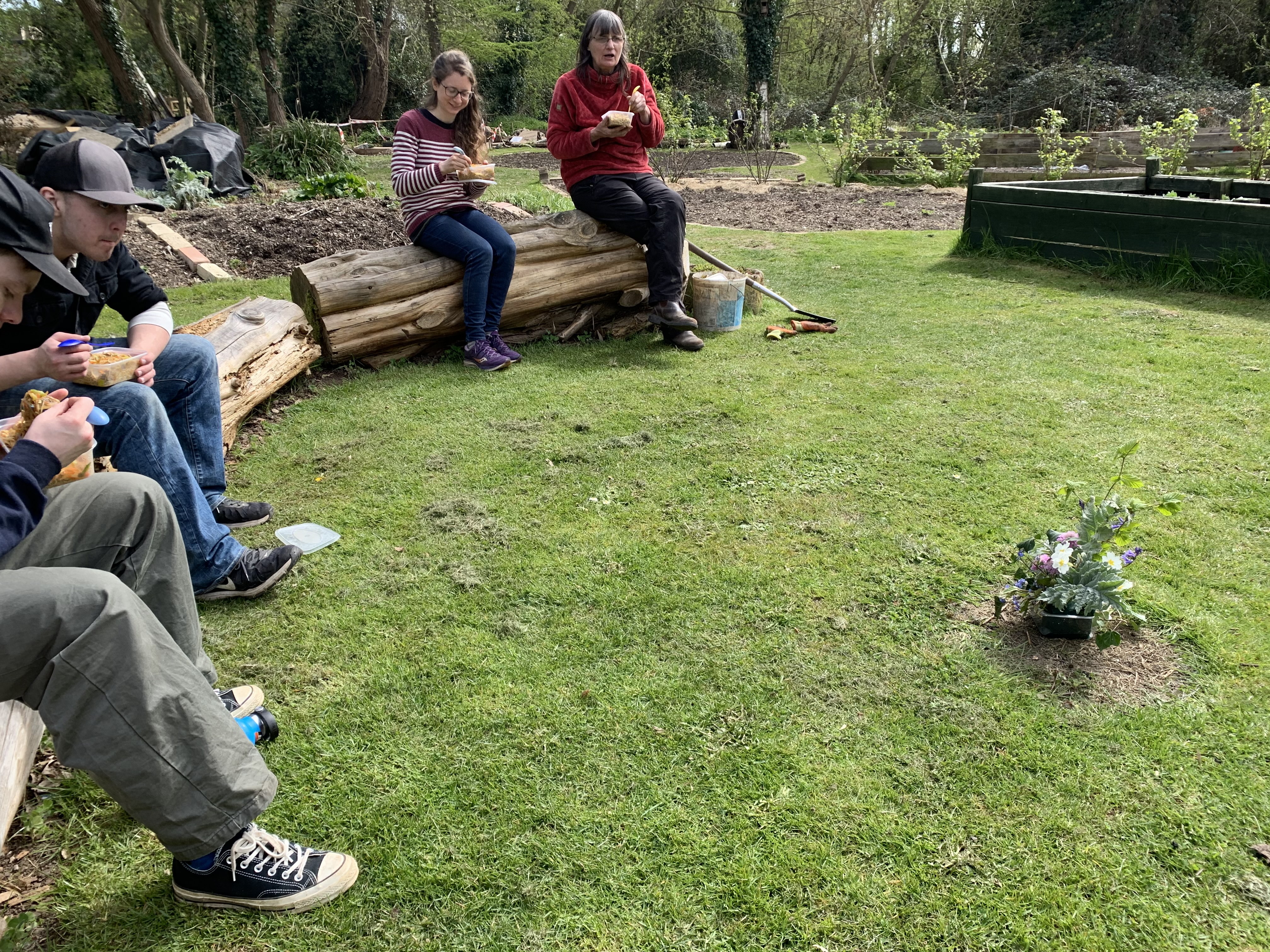
Lovely time at ECCG - a busy, enterprising Sunday for our volunteers. We moved materials for the shed, edged and weeded beds, we split up over-planted pots, did some watering and more besides! Rebecca took these lovely photos, showing the Community Garden in all its spring glory!

Ben gave us a brief lesson in flower arranging using blooms and greenery from the Garden - a thoughtful gift for an ECCG friend who is still shielding and unable to visit. It made a handsome arrangement for 'the table' as we ate our noodles!


Thursday, 1 April 2021

Welcome to Spring: bike racks and garden edges


We now have bike racks at both entrances to the garden, thankfully clearing the garden of our Sunday bikes clutter when they were perched in various places. The racks near our new mulch depot (that Charlotte built from Ian's old decking, pictured below) are looking a bit stark, but will hopefully blend in when the grass grows back - they may get painted too to help them disappear in the background. 

The racks near the kissing gate (pictured above) have been planted around with Pendulous Sedge (Carex pendula), which loves growing in our garden. In time this should enclose the area nicely, taking off the hardness of the bike racks, kissing gate and bridge behind.  

Ben and Didier covered the ground with cardboard layers and then woodchips in the hopes of getting rid of the nettles and dock there. Once clear, we can try to encourage ivy to make a natural, tough and low-growing ground cover. Ben has also been industriously transplanting the pendulous sedges from within our woodland area to the edges to enclose what will be our wild woodland area. 

Pendulous sedge is evergreen and bushy, it grows to a height and width of one metre with its flowering stalks growing another half meter above. This sedge should therefore create a thick, low, evergreen hedge of sedge around the edge! 


A useful saying to distinguish your edges 


This saying isn't 100% true for all species, but is a pretty good bet for distinguishing rushes, sedges and grasses from each other by looking at their flowering stalks: Sedges have edges, rushes are round and grasses are hollow right up from the ground.

Monday, 22 February 2021

It's all about birds at ECCG


At the end of January, Nicola did the bird count alone, due to Covid-19 restrictions, and this is what she found:

  • Robin 3
  • bluetit 5
  • magpie 2
  • woodpigeon 2
  • redwing 2
  • long tail tit 3
  • great tit 1
  • crow 1
  • jay 2
  • blackbird 3
  • little egret 1 (at the brook)
  • moorhen 2 (at the brook).

She also took some lovely photos of the birds in our garden (including the lovely photo of a tit by our beehouse (further below).


Lileng cleaned out the bird boxes and we moved one box and put up a new one. Last year, we noticed a wren had moved into our insect home, made from two hanging baskets tied together to make a globe. It had built itself the most comfortable looking nest inside.

The bug hotel when it was originally built


The Latin name for the wren ‘troglodytes’ means cave dweller, this is a direct link to its nest, a small domed structure hidden deep inside vegetation, so we are hopeful it will like the new nest site. 

The woven roof completely disintegrated last Autumn so, in order to encourage it back, Lileng  wove a new roof  with our coloured willow.


The nest inside the bug hotel


Lileng restores the bug hotel


Our solitary bees haven’t been so happy with the birds, though.This tit has eaten the bee cocoons at the open end of two of our bee home tunnels. 


Next year we will have to protect the bees from the tits.

Wednesday, 10 February 2021

Snow at Empty Common Community Garden


Our volunteer and supporter Ian sent us these photos from the snowy community garden. Snowdrops have appeared, so apt! These early blooms are always a delight. Below is a photo of the raised beds. It has not been a big snowfall, you can see blades of grass peeking out.


Monday, 18 January 2021

A new year's tidy garden thanks to recycled old bricks

This winter we were given hundreds of old bricks and what with all the slabs we have been given over the years it has spurred us on to organise ourselves better. 


Bricked beds towards the hut

We now have a lovely circular space ready for sowing a low growing flowering meadow, three large well defined beds for rotating our larger crops such as potatoes, alliums and sweetcorn, a well organised mulch depot and also a practical space for compost tea making and pernicios weed drowning.  


Bricked preschool and trampoline beds

Bricks on our mound by the herb spiral

A circular, bricked bed

New large beds with brick frames

The most important job in any garden is looking after the soil and getting plenty of organic matter and nutrients into it and now, finally, we have got ourselves well organised on this front. In addition to our great row of compost heaps, we have somewhere to store our fallen leaves to create a good seed compost. 


Our mulch depot

We also have a place to store woodchips so they can mature for over a year before using and a bay for storing the soil improver we get from the green-waste recycling plant and other organic matter that can be used as a mulch. Mulching reduces digging, watering and weeding, and improves the soil. However, to do this you need mulch and we are always finding ourselves short of materials to mulch with and places to store it. Our mulch depot looks very neat now. 


If you are interested in how the soil improver we get from Amey Cespa is made, here is a great little video 


Monday, 4 January 2021

Happy New Year! How to force rhubarb for an early crop

Happy New Year from the Empty Common Community Garden! Our coordinator Charlotte has sent in this update accompanied by beautiful photos. This year we did not have snow, aside a brief spell in December that was melted before lunchtime, the weather has been cold, reaching freezing temperatures on some nights and milder than usual on some days. 

We have just covered two of our rhubarb plants for force them into producing an early crop. We found two old metal dustbins with rotten bottoms in a skip a few years ago but no lids so have been covering the bins with bits of plywood. Yesterday, while walking along the towpath, I did a double take - there, by the river Cam, were the two lids we needed. 


Although thrilled to find these, I did think it was a sad indictment of how we live, the lids were there because of a change in children's behaviour from fishing with nets and rods for fish to magnet fishing for rubbish. You can buy beautiful terracotta pots with lids but these are super expensive and we think our rustic rubbish bins, which were once rubbish themselves look nice too.

Forcing rhubarb isn't a natural process and it is a little mean on the plant so we are only forcing two of our many plants and give them a few years off in between. Any rhubarb can be forced, but some varieties such as "Victoria" and "Stockbridge Arrow" have been bred especially with forcing in mind. Other varieties to seek out are those with "Early" in the name, such as "Timperley Early". We don't know most of the varieties we have as they have been divided from others' plants, but we do have a late rhubarb that we have never forced called "Livingstone", which is great as we can start picking those when our other plants need a rest.