Monday, 8 June 2020

June gardening jobs


Denitsa sent us this pic of our polytunnel in April
The unseasonally warm weather has cooled down. The volunteers are visiting on separate days to follow social distancing rules. Here is a selection of jobs for June.


  • Meadow - every three weeks, cut with a bill hook to remove tallest flowers and grass stalks at about 15cm.
  • Red veined sorrel in the small forest garden - remove all flower stems and heads to stop self-seeding. It becomes invasive otherwise. 
  • Marigolds - dead head and trim to keep bushy.
  • Globe artichokes - harvest, generally remove king globe at top of central stems first. 
  • Strawberries - prune out runners except for the healthiest ones on each of the healthiest plants.
  • Blackcurrants, gooseberries and red/white currants - water, mulch and cover with netting.
  • Potatoes - earth up with mulch e.g. woodchips, mature compost, dried grass clippings, etc. Feed fortnightly (with comfrey tea diluted to a very weak tea colour).
  • Brussels sprouts - transplant
  • Courgettes - plant out under bottle cloches to stop slugs eating them. Remove cloche after a week or two or when plants get too big.
  • French Beans - plant out seedlings sown in pots indoors and cover with a bottle cloche. Deer and slugs like them. 
  • Parsnip - thin seedlings to 15cm apart.
  • Peas/mangetout - harvest early types started off under cloches.
  • Runner beans - sow seed outside. Plant out seedlings sown in pots indoors and put under bottle cloches until too large for them. 
  • Squash/pumpkins - plant out making sure they are covered with bottle cloches or similar that are well dug into the soil as slugs love them.#
  • Swede - thin seedlings in stages to 25cm apart
  • Tomatoes - plant out staking securely and tying up carefully and not too tight to allow for growth. 
  • Cucumber (ridge) - plant out  making sure they are covered with bottle cloches or similar that are well dug into the soil as slugs love them.
  • Leek - transplant spring sown seedlings to final position, look up how to do this.
  • Sweet Pepper - plant out in polytunnel only, they won’t ripen outside.
  • Carrot (early) - harvest/thin out by removing the largest carrots carefully to leave good spacing for the smaller ones.
  • Basil - plant out in polytunnel and outside in sunny site.
  • Peas/mangetout - harvest early types sown outdoors.
  • Lettuce - begin to harvest.
  • Radish - sow single seeds 2-3cm apart in 1-2cm deep trough and cover. Leave 10-15cm between rows. The larger varieties, follow what is on the pack but sow singly rather than sprinkling. Sow one row and repeat regularly.
  • Kale (curly) - transplant to final position and stake securely.
  • Turnips - begin to harvest.

Friday, 8 May 2020

Bees looking for a home?


We have a solitary bee house still in function, but Sophie's beehive had to be temporarily removed to be cleaned as it was empty.

Sophie sent us a photo of the beehive on top of her shed to entice a swarm of bees. It's a bit like putting an ad in a newsagent's windows for a house or room to let.

Here is an interesting article on bees and an extract, slightly altered by Charlotte, from Kahlil Gibran’s "The Prophet" 

And now you ask in your heart,

"How shall we distinguish that which is good in pleasure from that which is not good?"
Go to your fields and your gardens, and you shall learn that it is the pleasure of the bee to gather honey of the flower,
But it is also the pleasure of the flower to yield its honey to the bee.
For to the bee a flower is a fountain of life,
And to the flower a bee is a messenger of love,
And to both, bee and flower, the giving and the receiving of pleasure is a need and an ecstasy.
People of our garden, be in your pleasures like the flowers and the bees.

Tuesday, 28 April 2020

The ECCG gardening calendar: May


Our coordinator shared the gardening calendar of Empty Common via the mailing list - here are some growing tips for May... bear in mind that the last frost date in the UK is 15 May.

May        Potatoes - Earth up when plants when about 10cm high, carefully taking soil from a 15 cm space either side of the plant by hand or hoe. One month later earth up again but with mulch eg. woodchips (after composting 6months minimum), mature compost, dried grass clippings etc. If frost is going to happen cover in fleece or earth up right over all leaves

May Marigolds - Remove all seedlings and young plants from beds except for the outer edges of the annual veg plot. Here allow 4-6 plants to grow across the end of the beds to make a low hedge around the area This plant seeds everywhere given half a chance sow don’t distribute around the garden

May - Aug Stone fruit trees - Prune, (only if you really know what you are doing), never prune in the colder, damper months

May - Sept Comfrey - cut for hot compost heap activating, tea making and mulch. Can cut 2-5 times a year depending on speed of growth. Cut before it sets seed if possible an watch out for bees on the plant. Wear gloves. Comfrey tea is high K good for plants which are flowering/fruiting and potatoes.

May - Oct Tomatoes - regularly take out side shoots and suckers from cordon type plants.(See week 2 as well)
Week 1 Cabbage Spring - harvest
Week 1 Kohlrabi - plant out in final position
Week 1 Basil - thin out seedlings to 1 cm apart if closer.
Week 1 Leek - harden off container of grown seedlings on glass hardening off table
Week 1 Turnip - thin seedlings 15cm earlies, 25cm maincrops

 Week 2 Spinach - Thin out previously sown seedlings
Week 2 Spinach - plant out seed sown indoors
Week 2 Parsley - plant out.
Week 2 Beetroot - sow seed outside, sow singly at 5-10 cm apart in, 2cm deep and cover.
Week 2 French Beans - sow seeds under bottle cloches outside
Week 2 French Beans - sow seeds in pots indoors
Week 2 Kale (curly) - sow in pots or seed bed; choose red/purple variety as it isn’t attacked by pigeons.
Week 2 Tomatoes - begin to harden off those for outdoors on glass hardening off table. Plant others in poly tunnel. And stake well, tie up carefully and dig in upside-down 5l bottle cloche using canes to hold it in place , this is to water in to so place to the side of plants so the bottle can be reached when plants have grown
Week 2 Cucumber (ridge) - sow seed under bottle cloches outside
Week 2 Runner Beans - sow seed in pots indoors
Week 2 Runner Beans - sow seed under cloches outside
Week 2 Leek - transplant grown seedlings to final positions, Plant leeks in rows 40cm apart with the spacing between each plant 15cm If you want very large individual leeks increase the spacing between plants. For each plant make a hole in the soil to a depth of 15cm using a dibber (rounded piece of wood about 3cm / 1¼in wide). Drop the leek into the hole (roots downwards) and gently settle it into the base of the hole. Fill the hole with water, this will cause just enough soil to cover the roots and at the same time ensure the soil is fully watered. Don't fill in with soil, the plants will be fine as they are.
Week 2 Swede - sow seed outdoors
Week 2 - 3 Strawberries - water well and feed (comfrey tea) and mulch around plants, cover with netting.

May - Aug Strawberries (newly planted ones)- Pinch out flowers of all first year plants from runners planted our in the Autumn.
Week 2 - 3 Carrot - sow main-crop seed
Week 2 - 3 Sweetcorn - harden off
Week 2 - 3 Sweet peas - plant out, providing frost not expected. Plant 10-15 cm apart in deep holes so roots don’t curl up and water well. Pinch out top bud when 10 cm tall. Provide climbing frame up to 2m tall.

May - Aug Sweet peas - Tie peas to frame when needed and pick flowers regularly.
Weeks 2 - 4 Pak choi - plant out in poly tunnel along edges of the beds sow not in the way for planting out tomatoes etc. plant 15cm apart
Weeks 2 - 4 Pak choi - harden off plants to go outside then plant under cloches of fleece 15 cm apart and 30cm between rows. Water well.
Weeks 2 - 4 Dill - Sow in situ in sunny spot, it doesn’t like being transplanted. Our raised beds should be ideal. Make seed bed smooth, sow seeds at 1cm depth and very thinly, greater than 2 cm apart in rows 25cm apart. Gradually thin seedlings to 10-15 cm apart when they are about 10 cm tall or still have plenty of space so the thinnings are useable.
Week 3 Radish - sow single seeds 2-3cm apart in 1-2cm deep trough and cover leave 10-15 cm between row. The larger varieties, follow what is on the pack but sow singly rather than sprinkling. Sow one row and repeat regularly every two weeks.
Week 4 Beetroot - plant out seedlings sown in pots indoors
Week 4 Squash / pumpkins - harden off under bottle cloches or the circular ones outside on glass hardening off table.
Week 4 Potatoes - nitrogen feed fortnightly (Nettle tea diluted to a very weak tea colour)
Week 4 Rhubarb - apply mulch
Week 4 French Beans - sow seed outside
Week 4 French Beans - harden off seedlings
Week 4 Swiss Chard - thin out seedlings
Week 4 Sweetcorn - plant out seedlings in a block pattern rather than rows. Can plant with beans for drying and squash around the ground.
Week 4 Courgette - Harden off indoor grown plants under bottle cloches to stop slugs eating.
Week 4 Swiss Chard - thin out seedlings
Week 4 Runner Beans - harden off seedlings on glass hardening off table.
Week 4 Basil - if planting outside, harden off on glass hardening off table.

Saturday, 14 March 2020

Special announcement - Coronavirus Policy


CoV-19 policy for Empty Common Community Garden


We ask that you consider the safety and well-being of others who may be at risk when deciding whether or not to come to the garden. Our policy is that:

  • People shouldn't feel in any way obliged to come to the garden.
  • We should collect gloves and keep them with us rather than share them as we usually do.
  • We should keep gloves on while at the garden so tools aren't touched by naked hands.
  • If people want to come but keep a distance, everyone should respect this.
  • We should keep at least 2-3m apart whenever possible.
  • People should bring their own hand sanitiser if they wish to use it.
  • If anyone is unwell with coughing or sneezing symptoms, they should not come.
  • If anyone has recently been in a country where the virus is prevalent, they should not come.
  • If anyone has been in contact with someone who has the virus, or the symptoms of it, they should not come.

Monday, 24 February 2020

A special pictorial post!


Looking through our archive, we discovered these great photos from Transition's Elena Moses. You can see the garden's transformation from 2103 (this blog started a few months down the line). 


Back in 2013

Early days

Our first flag 

The arrival of the polytunnel

Recycling was always our ethos

Growing rare varieties

Old Burwell wheat

Veggies in flower

Veggies in flower - again!

Tomatoes ripening on the vine

Charlotte and a volunteer

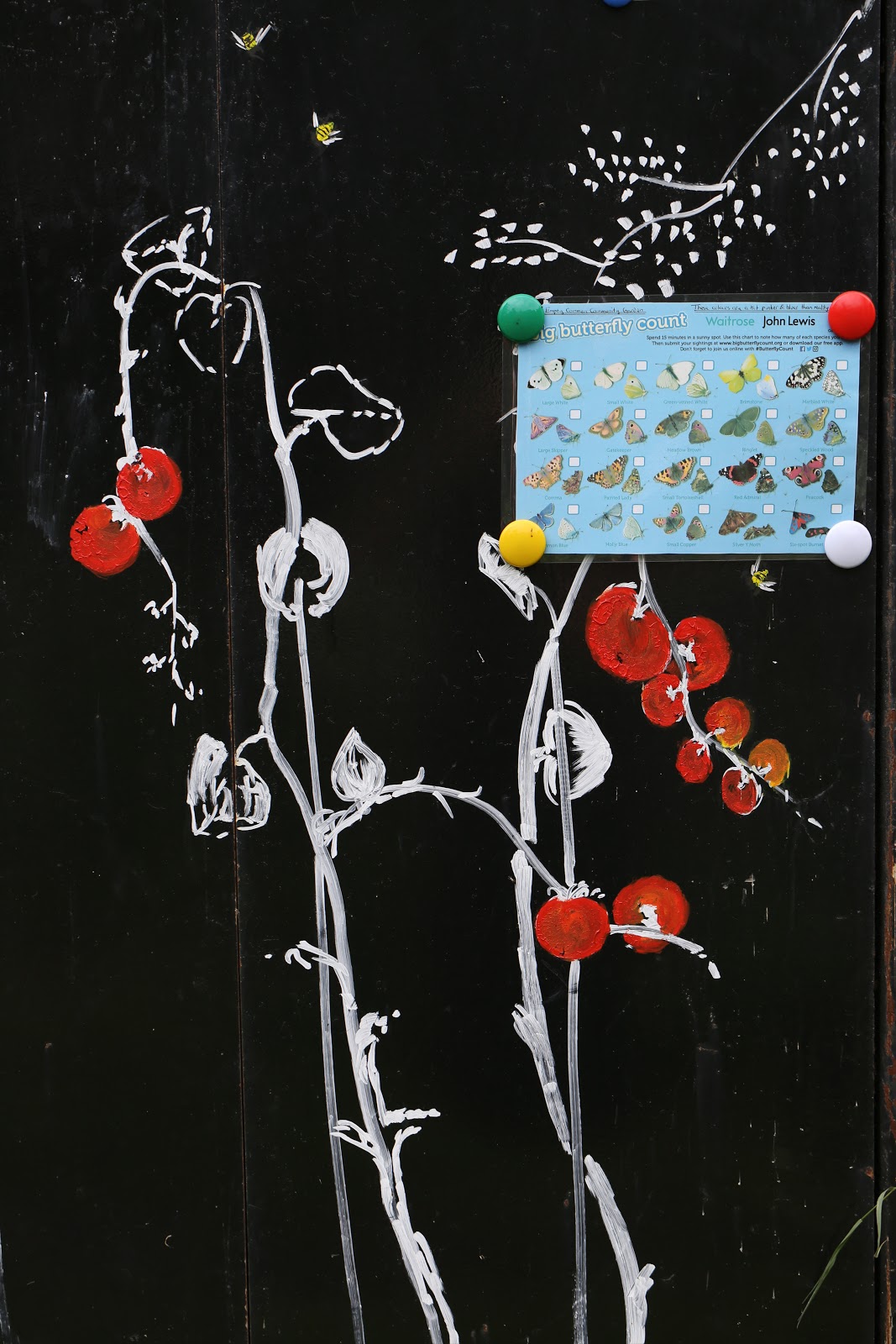
The black shed, painted by Rebecca

Sweet peas, beloved by us all

Charlotte with our special kettle

Party!

Weeding by the cabbages

Pest alert!

The bug hotel

The solitary bee house

Berries

Our spare produce basket

Compost heap instructions

The old shed

Autumn harvest

Tennis balls to cap pointy sticks

The compost toilet

The toilet inside... 

A shady sitting area

Our pond